There is something I want to talk about before I write the next chapter of Making Room.
This week, somebody sent me a rather angry message online.
Apparently, “people like us” expect the Government to come along and “kit out our house.”
I’ll admit, that one got under my skin. Not because somebody on the internet disagreed with me. If you write things publicly, disagreement rather comes with the furniture, alongside the trolls and the AI bots. Usually, hatred gets ignored along with the general white noise of awful things on the World Wide Web.
However this particular message bothered me slightly because hidden underneath that sentence is an assumption that I think quite a few families in our situation encounter.
That is, if you have a disabled child and you ask for financial help adapting your home, somebody else is somehow paying for you to have a nicer house. “We pay our taxes“.
So let me clear something up here…
NO.
We don’t expect anybody to kit out our house.
Not remotely.
In fact, if anybody would like to inspect our bank account after this project is finished, I suspect the strongest emotion they will experience is deep concern.
Couple that with the fact that, at time of writing, I am being paid precisely £0 by my employer until such time as a medically fit to return to work.
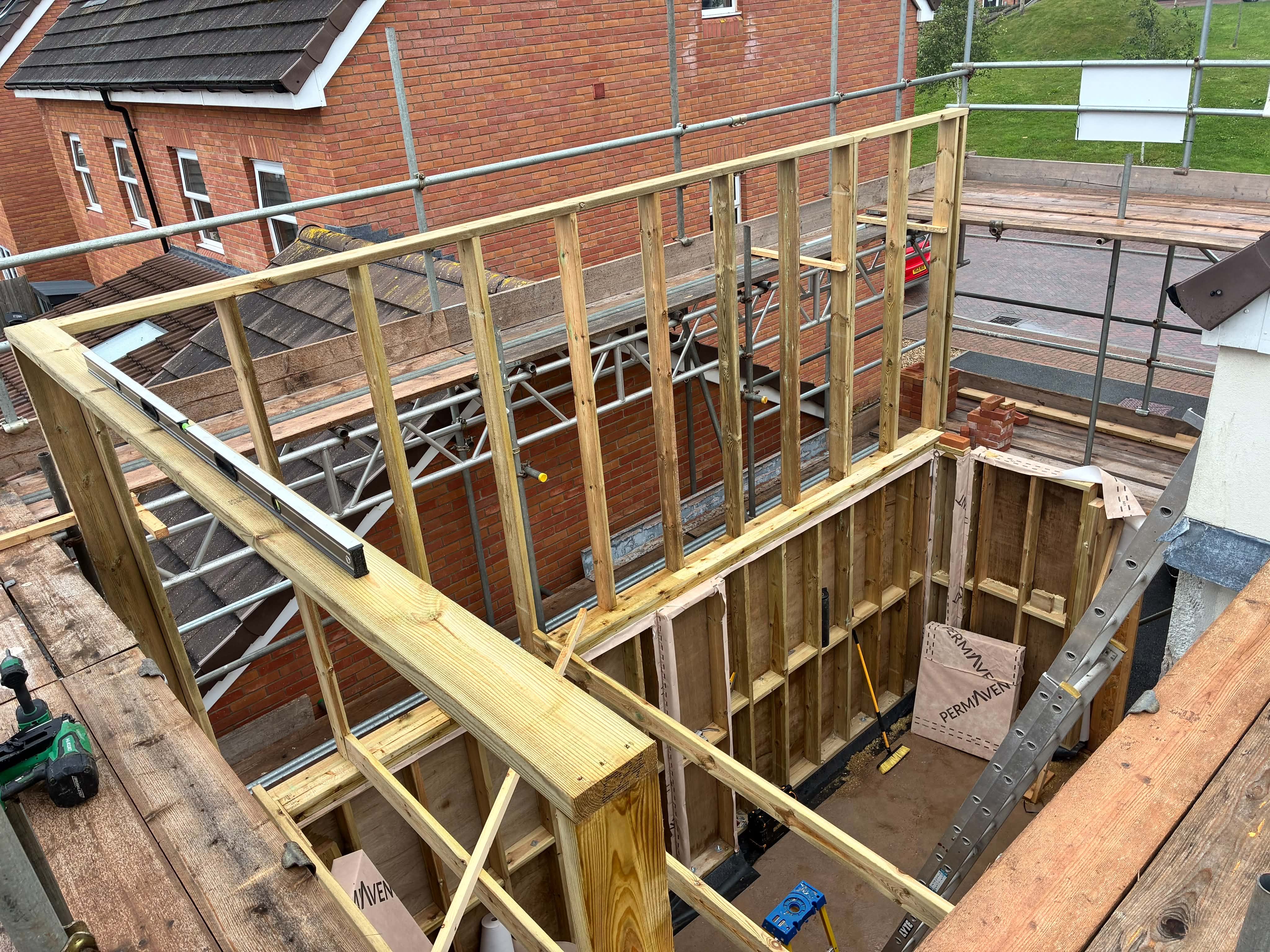
We are spending an enormous amount of our own money on this extension.
Money we’ve saved.
Money we’ve borrowed.
A lot of money we’ve borrowed.
Money we would, frankly, have been delighted to spend on big holidays, cars, meals out, hobbies, gaming PCs, gig tickets, nights out and all the other ridiculous things adults traditionally use disposable income for.
Instead, we have bought steel beams. Insulation. Plasterboard. Pipes. Accessible doors. Electrical work. Roofing. Flooring.
And approximately seventeen million miscellaneous tubes of sealant.
WE PAID FOR THE EXTENSION.
We are paying for huge amounts of the work inside it. Nobody has arrived at our front door clutching a government-issued IKEA catalogue and asked whether we’d prefer the oak or walnut finish.
That isn’t how this works.
And yet…
I will never apologise for asking for help where help exists specifically for disabled people.
Because Poppy needs a helping hand in life.
She always has.
Some children start life with fewer barriers
Until relatively recently, our daughter needed oxygen to help her breathe. She had an NG tube running into her stomach to help her eat. We wrote about the frankly enormous moment when that tube finally came out in We Just Took Out Poppy’s Feeding Tube!.
Think about those two things for a moment.
Breathing.
Eating.
Two things most of us accomplish thousands upon thousands of times without giving either of them the slightest thought.
Poppy needed assistance with both.
At five years old, she couldn’t stand independently for more than one second. Today, she still cannot simply run upstairs because she has forgotten her favourite toy.
She cannot independently climb into an ordinary bed.
She cannot wander through whichever doorway happens to be closest.
She cannot decide that she wants to go into the garden and simply open the door.
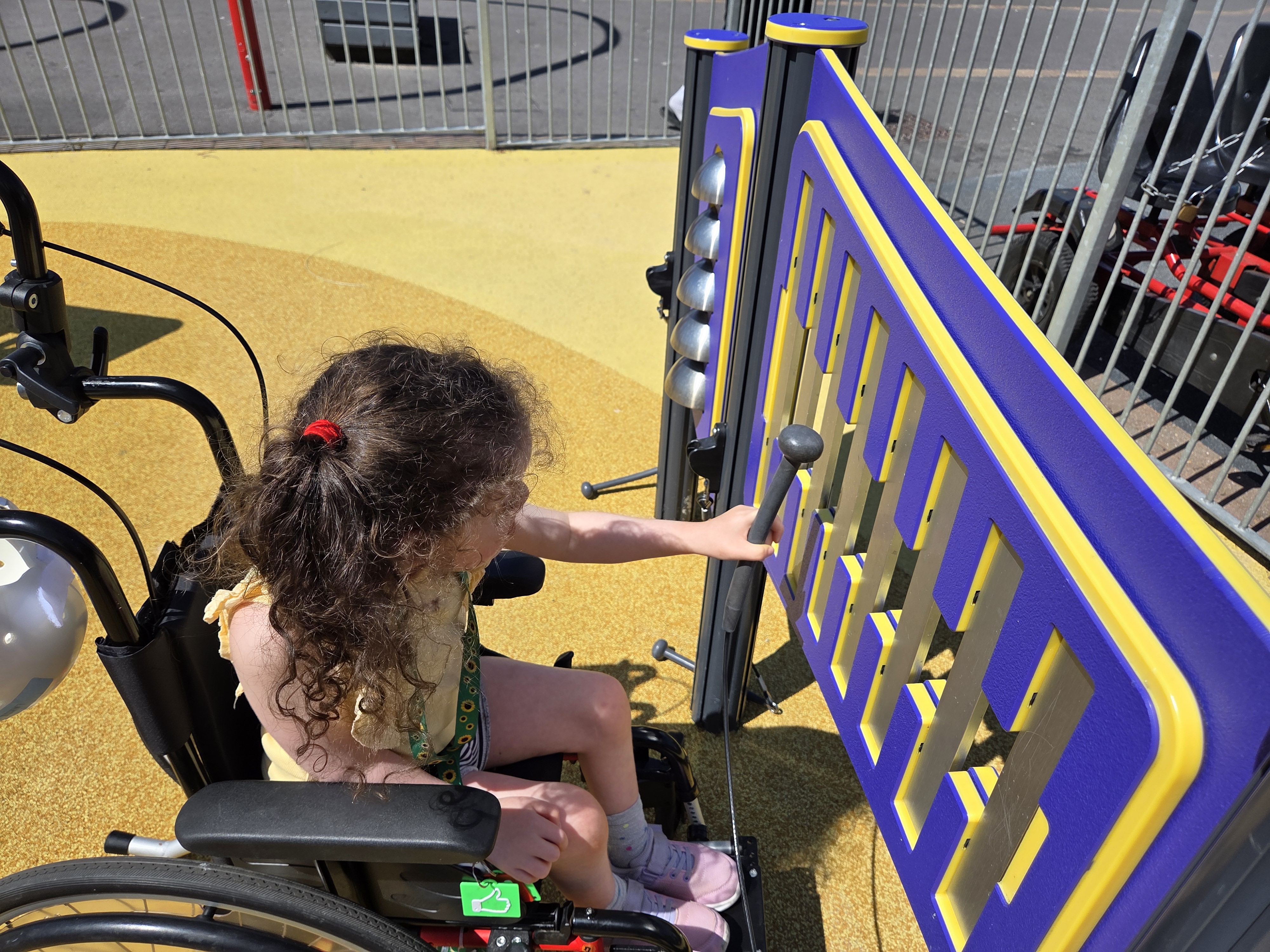
Poppy uses a wheelchair.
She needs specialist equipment.
She needs adults to help her with things other children naturally grow into doing for themselves.
And she needs enough space around her for those adults to help her safely.
That is where something like a Disabled Facilities Grant comes in. Not to make a home nicer. To make a home usable.
Accessibility is sometimes measured in centimetres
One of the things this project has taught me is just how ridiculously important tiny details become when somebody uses a wheelchair. Before all this, I never gave much thought to the width of a doorway. A door was a door. You opened it. You went through it. End of story.
Now, I know that door widths matter. Thresholds matter. Floor surfaces matter. Turning circles matter. The position of furniture matters. The gradient outside a door matters.
Sometimes even a few centimetres matter.
We have spent months making decisions that most families would never have to think about.
What flooring allows Poppy’s wheelchair to move easily?
Can she turn around in here?
Will carers be able to safely help her there?
Can the specialist bed fit here?
Can we physically get her through that doorway?
Can she get from the driveway into her own home?
These aren’t questions about interior design. They are questions about whether our daughter can actually use her own house.
The word “grant” sometimes creates the wrong picture
I think this is where some of the misunderstanding comes from. People hear the word grant and imagine somebody being handed a cheque to improve their property.
New kitchen. Fancy bathroom. Bigger bedroom. Lovely jubbly.
Except disability adaptations don’t exist because somebody fancies a nicer ensuite. They exist because the physical world was largely built around assumptions about what human beings can do. You know…
Walk up a step.
Climb a staircase.
Step over a threshold.
Stand in a shower.
Get into bed.
Reach a handle.
Move through a doorway.
For most people those things are so ordinary they are invisible. Until you love somebody who cannot do them.
Then, you start seeing the barriers everywhere.
So yes. We will ask for help.
If there is a Disabled Facilities Grant available to make part of our home accessible for Poppy, we will apply for it.
If a charity exists specifically to help disabled children obtain something they genuinely need, we will ask them.
If an organisation has funding specifically intended to reduce one of the barriers Poppy faces, we will fill in the form.
We won’t demand it. We won’t assume we’ll receive it. And we certainly won’t pretend something is an essential disability adaptation when it isn’t.
But I refuse to feel embarrassed about asking anymore.
Because asking for help isn’t the same thing as expecting somebody else to provide your lifestyle. Sometimes it simply means recognising that equality occasionally requires more than treating everybody exactly the same.
Most six-year-olds don’t need funding to get through their own front door.
Poppy does.
Most children don’t need their parents to calculate whether their bedroom has enough manoeuvring space for specialist equipment.
Poppy does.
Most children don’t need adults discussing turning circles, accessible thresholds and wheelchair-friendly flooring while standing in the middle of what used to be a garage.
Poppy does.
That isn’t extravagance.
That’s disability.
We would rather not need any of this
And perhaps this is the bit that gets lost most easily to some people.
I would quite happily swap every grant application, every occupational therapy assessment, every piece of specialist equipment and every accessibility calculation we’ve ever made for Poppy simply being able to sprint through the front door and jump up for a hug.
Of course I would. I’d happily have spent the money on something ridiculous. I’d have bought that enormous television. Heck, probably several of them. And a PS5. Or a family holiday to Disneyland.
But that isn’t our life.
Our life involves a little girl who has fought enormously hard for things most of us were simply given.
First to breathe.
Then to eat.
Then to sit.
Then to stand.
And now, slowly, painstakingly, to explore more of the world around her. Frustrated by her own limitations every day.
So, if society has decided that helping disabled children remove some of the barriers in front of them is something worth contributing towards, I happen to think that’s a pretty decent use of collective money.
Because the alternative isn’t some great victory for personal responsibility. The alternative is often simply that the barrier stays there. Forever.
Everything else? We’ll keep doing exactly what we’ve been doing.
Saving.
Paying.
Borrowing.
Building.
Worrying.
Painting.
Measuring.
Occasionally opening the banking app and staring silently into the middle distance.
And then carrying on.
Because throughout this entire Making Room series Emma and I have been writing, I’ve kept coming back to the same thing. This project was never really about adding square metres to a house.
It wasn’t really about increasing the value of the property.
It wasn’t really about having a bigger bedroom.
It wasn’t about just simply building an extension.
It was about removing barriers from the life of a little girl who already has quite enough of them.
And I will never apologise for that.






Leave a Reply